Clarifying the Role of Pain in Injuries
First Appeared in TheClimbingDoctor.com
“For a long time I dropped things, mostly smaller items like car keys. I also suffered from phantom pains. The tip of my finger itched even though it wasn’t there.”
It wasn’t that far ago that phantom limb pain was a complete mystery. This is a sensation that someone experiences in, say their finger, after it’s been amputated. The finger no longer exists yet the person can still feel it. This is possible because sensations, such as pain, are experiences created by both your body AND your mind.
When a finger is amputated you lose the nerves that were part of the finger. You don’t lose the nerves that connect your finger to your brain, or the part of the brain dedicated to that finger. What remains are crucial components for the production of pain, and are sufficiently powerful to create pain in a limb that doesn’t exist. This is why phantom limb pain is possible.
This phenomenon has allowed us to learn a lot about how pain works. Unfortunately, misconceptions around pain are abundant, some of which dampen our ability to recover from injury. Clarifying the purpose of pain and how it works can go a long way in helping us overcome the most stubborn of injuries.
_ _ _
You’ve got a week left of training before you set-off for your fall climbing trip. You put your time in this year with the hopes of finally sending your long-time project. You’re feeling strong but will occasionally get an ache at the base of your left ring finger with hard bouldering sessions. It usually settles within a couple of days and you think nothing of it.
_ _ _
Pain is meant to protect you
When you experience pain, it is first and foremost a warning system meant to protect you from potential harm. If you take a finger and slowly start to pull back on it, you’ll experience pain before you cause tissue damage. This is meant to prevent you from going further so you don’t cause injury, and it happens in everyday life.
If you sit on a cold rock at the crag for too long your bum will get sore. This is meant to remind you to move around. You wouldn’t have caused harm to the tissue – it’s resilient! On the other hand, if you ignored the signal to move you may eventually sufficiently restrict blood flow to your bum and cause injury to the skin, known as pressure sores.
Perhaps a more pertinent example happens with training. If you’re pushing hard and nearing your body’s limits, you’ll start to get muscle soreness, mild pain, or straining in and around the joints. If you stop the session when the warning signs show up, there’s a good chance your tissues will settle within a few days and you’ll be good to start training again. The pains you experienced acted as a warning to tell you to back off so that your tissue can recover. Not heeding the warning is a good way to get injured.
_ _ _
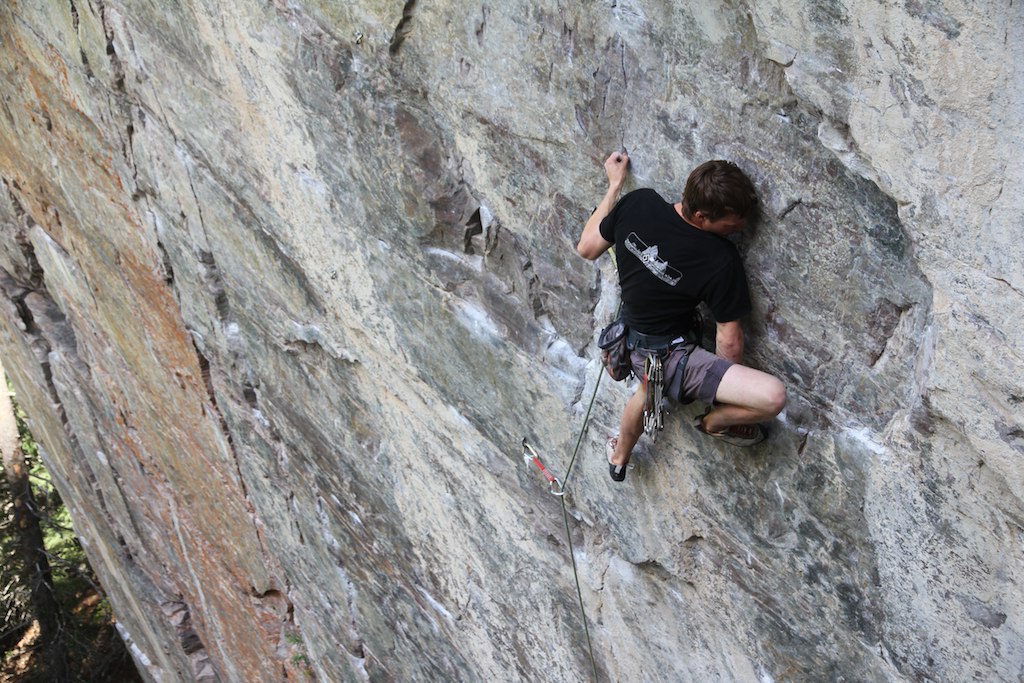
This is your second day climbing and your third and final go at your project. It’s a gentle approach into a progressively crimpier pumpfest. It finishes with a deadpoint before locking-off to grab a jug. The terrain eases off significantly afterwards. Things are going well – your beta is clean and you’re moving quickly. Your left hand hits the edge of the deadpoint and you manage to curl your fingers into a full crimp. You pull into your lock-off and release your right hand. “POP” goes your left ring finger. You’re committed and finish the move. Only ten more feet of climbing. You think to yourself “that wasn’t painful” and finish the climb. As you lower you start to feel an ache in your finger. The next day, your finger is swollen, painful and difficult to move.
_ _ _
If you’re lucky, you’ll see an injury coming before it’s too late. We’re not all lucky and warnings don’t always present themselves. Pain is almost always associated with fresh injuries but when we experience the pain isn’t always consistent. Why are injuries painful, and why isn’t the timing of pain always consistent?
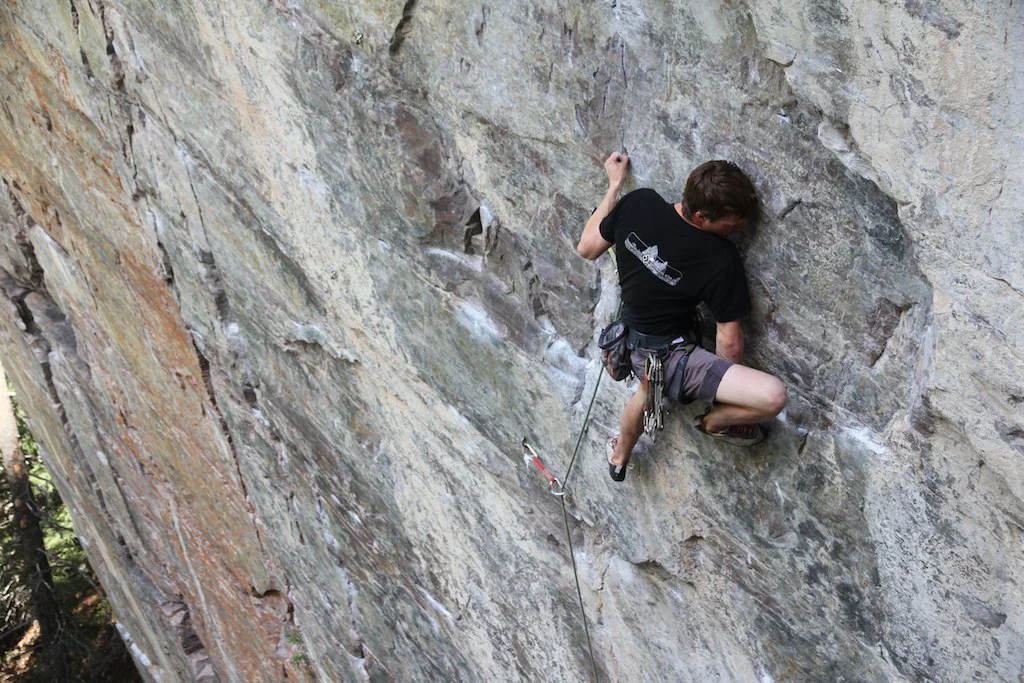
Photo Credit: Lauren Watson
A noxious stimulus sets off the alarm
In the example above, the “pop” was a sprain to the A2 pulley of your ring finger, a fairly typical climbing injury. You only start to feel an ache after you finish the route, though damage would have occurred with the pop instantaneously. Inflammation ensues. If there’s enough inflammation, nociceptors are triggered.
Nociceptors are nerve endings meant to detect a noxious stimulus. Once the nociceptor is triggered, it sends a signal up to the spinal cord. The spinal cord will then relay that message to the brain. If the brain determines that the nociceptive signal poses a threat, you will experience pain in your finger. By the time you come off the route, you’re starting to feel an ache and thinking “something is wrong”, all thanks to the inflammatory process that triggered your nociceptors.
Nociceptors can also be triggered by changes in temperature (e.g. a hot stove) and mechanical stresses (e.g. an aggressive stretch). The “pop” you felt would have triggered the mechanical nociceptors yet it wasn’t painful, an all too common occurrence. You were lucky enough to feel the ache immediately after completing the route. Some people won’t feel it until the next day, or in extreme examples, until they climb again a few days later. How can this be?
Nociception can be stopped at the spinal cord
The brain has a remarkable ability to lessen or even stop the noxious stimulus from making it all the way up to the brain. It can send a signal to the spinal cord that in essence says “we’ve got more important things to worry about (red-pointing this route!!), so don’t bother me with your nociception. I’m not interested right now.” This is why you don’t always feel pain with a very clear “pop”, and why climbers will often times finish a route before noticing their finger pain. This is also why you can run a marathon with a sprained ankle, and even win the race!
The brain listens to the danger signals
What happens when nociception makes it to the brain? The brain has the difficult job of interpreting all of the thousands of signals that come from the body at any given time. It needs to understand the signal before making a decision. Based on all of the information available to it, if it deems the signal to be dangerous to the tissue, and there aren’t more pressing matters, you will experience pain, whether it’s an ache, throb, sharp, lancinating, piercing, burning, stabbing, or (insert any pain descriptor) type of pain.
Now we know why we don’t always feel pain at the moment of injury, and we can explain the throb that occurs shortly after an injury. Let’s take a closer look at the alarm system as the healing process begins.
_ _ _
The rest of the trip was a bust. The finger progressively got worse. You could barely close your hand, making it impossible to climb. Thoughts about a long-haul recovery have taken over. It’s been two weeks since your injury and you find yourself sitting on your couch. You notice that the swelling and pain have finally started to settle. You decide to test it by lightly crimping your coffee table. BAM! “That *@#$ing hurt! This finger is totally messed.”
_ _ _
The alarm system sensitizes
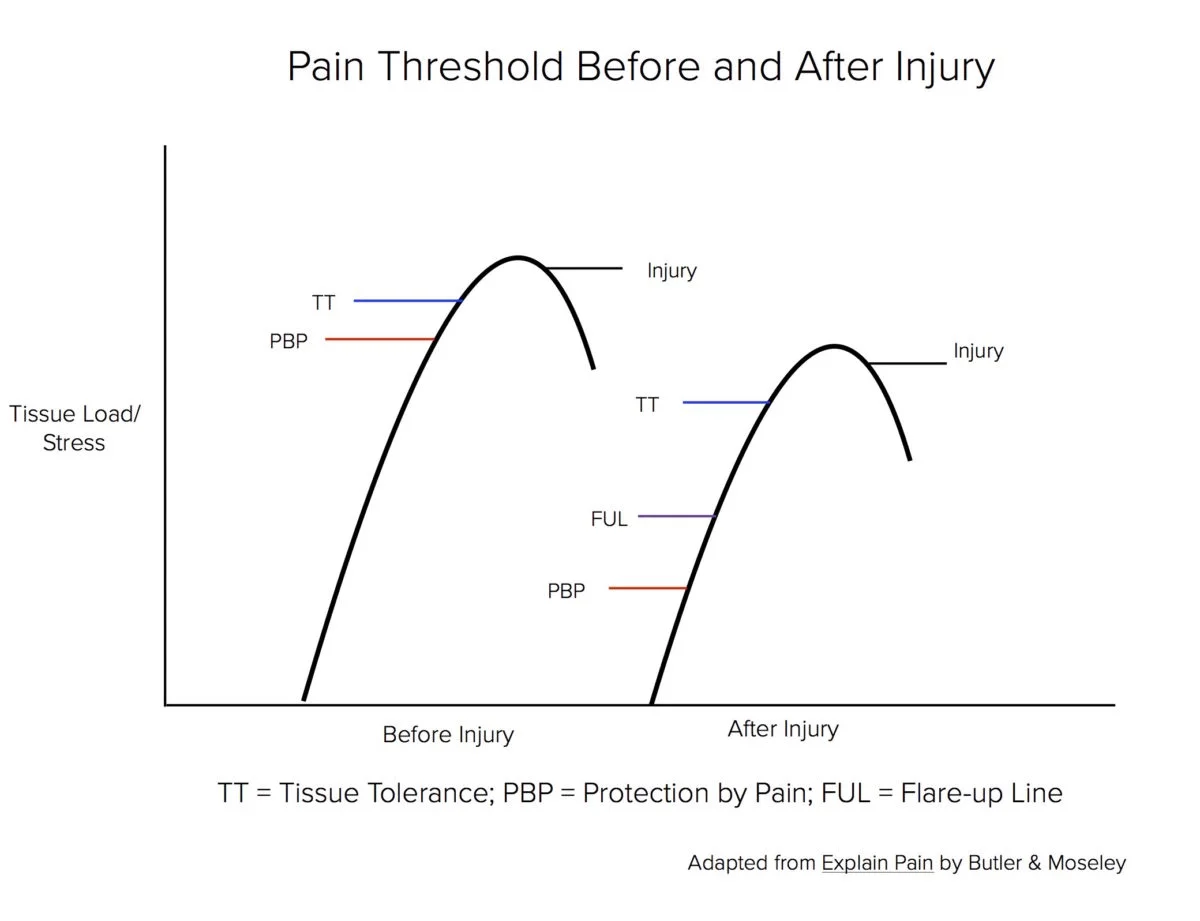
For simplicity’s sake, it’s easiest to think of two systems working together to help you recover from your recent injury. You have a system designed to heal your injured tissue and one to protect the tissue while it heals. Broadly speaking, the first consists of the inflammatory process, and the second creates your pain experience. Both are intricately connected and work together to get you back to health. While the inflammatory process repairs damaged tissue, the nervous system warns you against potentially harmful situations. Think of it as a smoke detector. If a sufficient amount of smoke is detected (nociception) it will sound the alarm (pain).
After an injury, your smoke detector is more sensitive. It will sound the alarm at the faintest hint of smoke, even if a fire (harm/ further injury) is far from a reality. This is your mind and body’s way of protecting the injured tissue so you don’t hinder or aggravate the healing process. You’ll experience pain far before you cause more harm. Remember that pain is meant to protect you.
During the coffee table incident, it’s far more likely that you triggered the alarm system without causing further harm. The pain typically settles relatively quickly without a significant increase in swelling, aching, or stiffness. Your warning system sounded the alarm to protect the already injured tissue.
The alarm system can be a helpful tool in the recovery process. It reminds you to drop into a lower gear and slow down. As the injury heals, and you begin to gradually load the tissues, the system will begin to desensitize and you’ll find yourself able to do more with less pain.
_ _ _
It’s been four weeks since the injury and the finger doesn’t seem to be improving much. The coffee table incident really freaked you out. It was quite sore for a few days afterwards. You went to grab a milk jug out of the fridge and even though it wasn’t as bad as the coffee table, you still felt pain. You wonder whether it needs more rest so you decide it’s best to avoid using the finger with other tasks – no milk jugs, no opening doors, light use with brushing your teeth and cutting food. Eight weeks out and it almost seems to be getting worse. Lifting a milk jug out of the fridge is more painful than it was three weeks ago. “What gives?!!” Four months out and lifting a milk jug out of the fridge is unthinkable. “Something must be seriously wrong.”
_ _ _
The alarm system can remain sensitized past healing
The experience of pain and the process of healing, though intricately connected, can diverge. It’s possible that as the healing subsides, the alarm system remains sensitive or even continues to sensitize. For instance, during the coffee table incident, your alarm system may have created a sufficiently noxious stimulus that you decided to avoid using the finger all together. Every time you use your finger your alarm system goes off and you go back to protecting the pulley that’s not healing. We often think that pain relates to tissue harm and that we should avoid anything that is painful. Remember that pain is meant to protect you and is a poor indicator of harm being done to your tissues.
If we continue to avoid using the finger in fear of causing harm, we may further sensitize our alarm system to the point that previously non-painful tasks become unthinkable. It’s possible that the healing process will finish and for the alarm system to remain sensitized. Rather than simply the pulley, your whole finger may become tender to touch. It may progress to your whole hand, forearm and upper arm weakening. This can be an incredibly frustrating, demoralizing, depressing, and for some a life altering experience. The good news is that the human body is adaptable no matter your age, and pain is changeable, no matter how long you’ve had it or the severity of your injury.
Desensitizing the Alarm
A sensitized alarm system needs desensitization, and one of the best ways of doing this is by understanding how pain works. We now know that pain is meant to protect you. We also know that pain is a poor indicator of tissue harm, and can occur even when no harm is being done to your tissue. We also know that pain can persist past healing.
Armed with this knowledge the next logical step is to say “Hell! If my alarm is overactive I may as well ignore and push through the pain”. False! This can be a good way of making the situation worse. Remember that you may have avoided exposing your tissue to stresses such as lifting a jug of milk. Not only does your nervous system need desensitization, your tissues need to adapt to the load you’re exposing it to. In other words it may need some time to adapt to lifting a milk jug again. When re-introducing movement and activity, I typically have my clients ask themselves two questions:
1. Is this safe for me to be doing?
To phrase it differently, am I exposing my tissues to a safe load? When I lift the jug of milk out of the fridge, I may experience a bit of pain, but can my tissues handle this load? Remember that pain is not an indicator of tissue harm, and with a sensitized system you’ll experience pain before you cause harm. If you don’t know the answer to this question it’s best to start more conservatively. Can my finger handle holding a phone despite some pain? Chances are yes, but for some this might still be too much to start with. Can I bend my finger despite mild pain? Lightly moving your finger through its available range of motion is typically a very safe bet if you have any doubt. The next thing I ask is:
2. Will I be OK tomorrow?
There are a lot of reasons for why pain may not always present itself immediately after a stressor. This is why it’s important to ask yourself whether you’ll feel pain later. Take comfort in knowing that pain that lasts a couple of days, though irritating and perhaps demoralizing, is unlikely to cause any more harm to the injured tissue. We refer to these as flare-ups of the nervous system, and are perhaps not surprisingly relatively common. This is normal, and provides an opportunity for evaluating how hard you’re pushing. When a flare-up happens we typically need to pull back to rest the nervous system. Once the pain has calmed down we then try a similar activity at a lesser intensity. The idea is to build your activity levels gradually and systematically.
In his book The Push, Tommy Caldwell describes exactly this process when he was overcoming a sensitized finger stump and experiencing phantom limb pain. Although an extreme example, the process is the same. He gradually and systematically exposed his new finger to more aggressive exercises and tasks to the point of climbing the Dawn Wall.
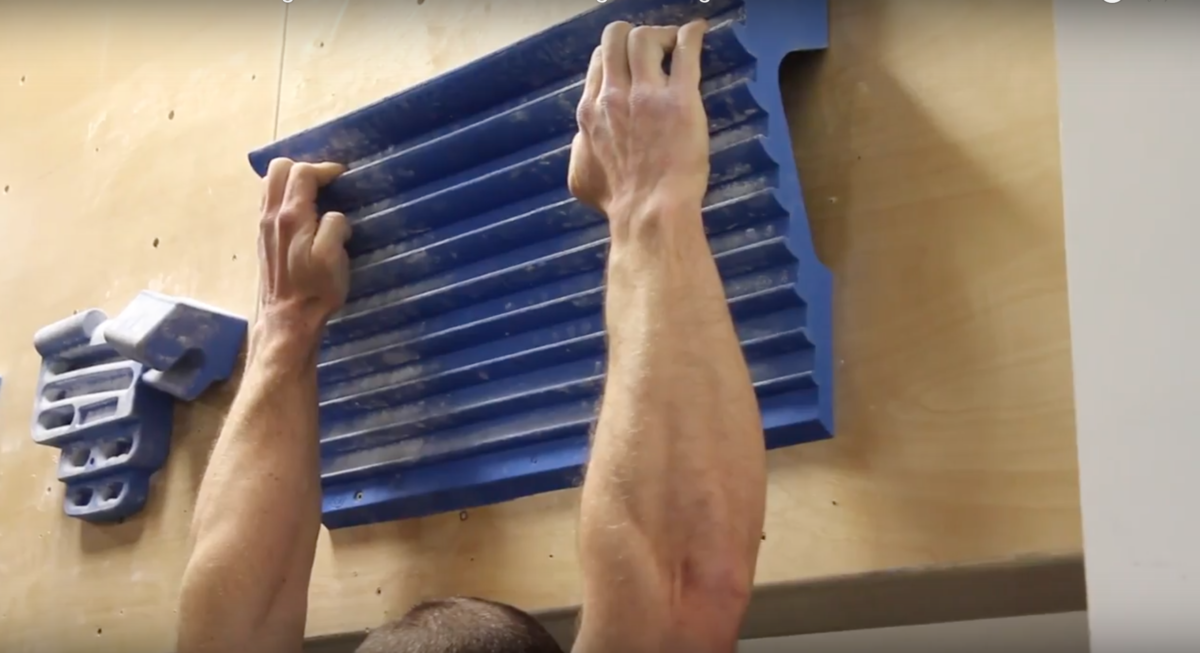
Overtime you’ll find yourself using your finger with everyday tasks, lightly crimping coffee tables, and even starting to try easy rock climbs. Eventually you’ll start bearing down on crimps and building the confidence to try your old projects. Gradually building your tolerance to movement and activity, while simultaneously pacing your activities to avoid delayed pain are great tools in helping you overcome a sensitized alarm. If you need help getting there, look for a physical therapist well versed in the latest pain science and exercise physiology. If we stick to the finger, the end-stage rehab usually consists of fingerboarding. If your therapist is recommending more soft tissue work three months post injury, it’s time to look for someone else. Remember that gradual loading and pacing is your best bet no matter the injury.
_ _ _
It’s been a year since your finger injury and you find yourself looking at the old project that started it all. You strap on your shoes, tie into your harness and begin making your way up the gentle approach leading to the crux. You can feel your heart pumping in your chest. The nerves are mounting. You take a few deep breaths before starting the long and pumpy crux. The finger feels great – not an inkling of pain or discomfort. You hit the deadpoint with the left hand, curl your fingers into a crimp, release the right hand and reach for the jug leading to easy terrain. You don’t even feel pumped as you’re lowered to the ground.
_ _ _
Is it possible to come out stronger than you started? It sure as hell is.
REHABING A BROKEN PHYSIO
If you've ever wondered how a physio goes about rehabing their injuries, this is your chance. Here’s a glimpse into my recovery process after busting my ankle at the start of the climbing season:
Week 1 (May 17th)
I busted my ankle on Super Dyke. For those of you familiar with the climb, you'll guess exactly where: between the boulder and the tree. My foot blew off the slab quite unexpectedly (I was feeling invincible that night!) and went crashing down onto the tree root below me. My left foot landed flat and my knee proceeded to continue moving forward. For you anatomy buffs, I hyperdorsiflexed my ankle. I did a couple of quick tests which told me I should get an x-ray to rule out a fracture…
No fractures!
The next day I woke up with a very swollen ankle, unable to put very much weight through my foot. It was clear this wouldn't exactly be a quick recovery.
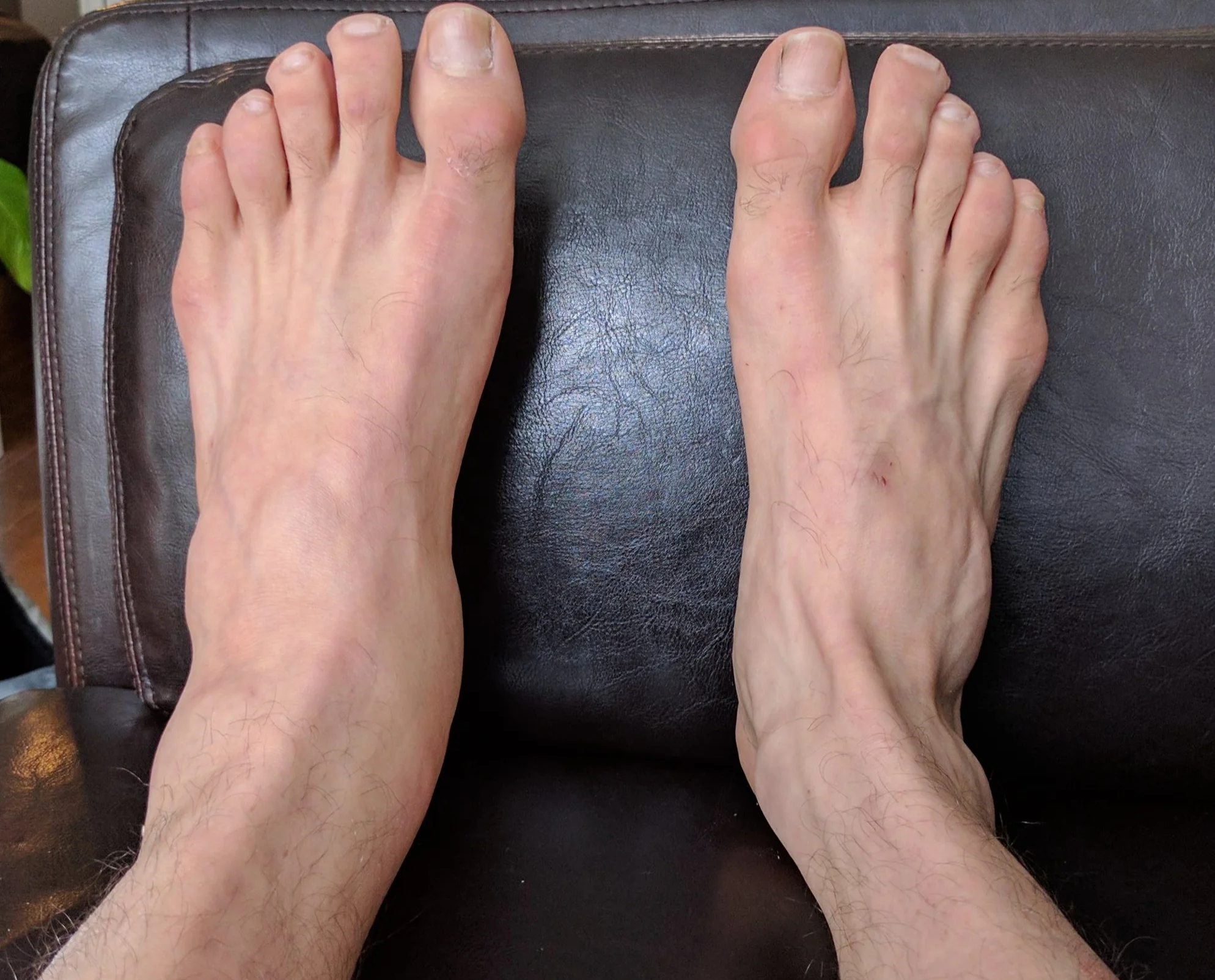
At this point most people would think about RICE. Ever hear of it?
REST.
ICE.
COMPRESS.
ELEVATE.
DID I REST?
I sure did! I avoided anything that was painful. In fact it's the only thing I could do. That's the beauty of pain and inflammation - it stops you from causing further harm when the system is weak and trying to repair itself.
DID I ICE?
I did NOT. Here's why:
Ice is thought to help slow or even prevent the effects of inflammation. It turns out the inflammatory process plays a very important role in healing. In fact this is exactly what HEALS your injuries, so why would you want to take it away? You shouldn’t take it away. Trust your body to heal itself - it does a great job!
To add insult to injury, when we look at the research, it turns out ice probably doesn’t even penetrate deep enough to have an effect on the inflammatory process. There is no strong evidence to suggest that icing an injury will accelerate your healing time.
Some will say we should use ice to help manage pain. While ice may help reduce your pain, I would argue that pain is very useful and a natural part of the healing process, especially in the acute phase. It tells you to back off! I chose not to use ice for pain management mostly because I could adequately control my pain by resting and protecting my ankle. If you push through the pain and use ice as a management strategy you’re not doing yourself or your injury a favour. In fact pushing through your injury at an early stage may in fact prolong your recovery period.
DID I COMPRESS?
This one isn't as clear cut as icing. Some studies have shown positive results on healing time and pain, while others have shown it to be ineffective. So what did I do? I wore tight ski socks and wrapped it with a tensor for a couple of hours here and there. I could visibly see a decrease in swelling with aggressive wrapping but it's questionable as to whether it had an effect. Just because the swelling is temporarily reduced, doesn't mean this accelerates healing time.
As far as pain goes, I experienced more pain immediately after removing the dressing. This would lead me to think that compression is helpful in controlling pain. What's more likely is that I experienced a temporary increase in pain as the ankle returned to its more natural swollen state. In other words, the ankle wants to be swollen because of damaged blood vessels and permeable cell membranes. The body will repair this over time and swelling will come down naturally with a little help from specific exercises.
DID I ELEVATE?
Surprisingly, this is the least studied of the RICE recommendations. Intuitively, it makes sense to elevate for swelling control, especially if it helps with pain.
Did I elevate it? Yes! I elevated it whenever it was throbbing or aching. Having it high above my heart was the most comfortable position. If it wasn't bothering me, I had it resting on the coffee table or planted on the ground. This is arguably the equivalent of resting my ankle.
What did I do?
If I didn't ice, or do much compressing, and wasn't religious about elevating it, it doesn't sound like I did much, does it? To the contrary, I did quite a bit.
Protection and Optimal Loading
I moved my ankle and toes as much as I could through it's available pain free range. I did so in non-weight bearing positions, but also with my foot planted on the ground. I used the help of a belt to move it around, but also did so actively with my ankle and foot muscles. I let pain be my guide. I would avoid anything that brought on an increase in pain, trusting that when I felt pain it was more so a warning sign as opposed to an indication that I was causing more harm (see video below).
I practiced walking as normally as I could using crutches. I also started moving my left knee, hip and back to help avoid the effects of disuse. I used my physio stool to load my left hip, which helped a lot with work! I was even able to get into the pool and tread water lightly. In essence, I tried to be as active as possible without aggravating my ankle.
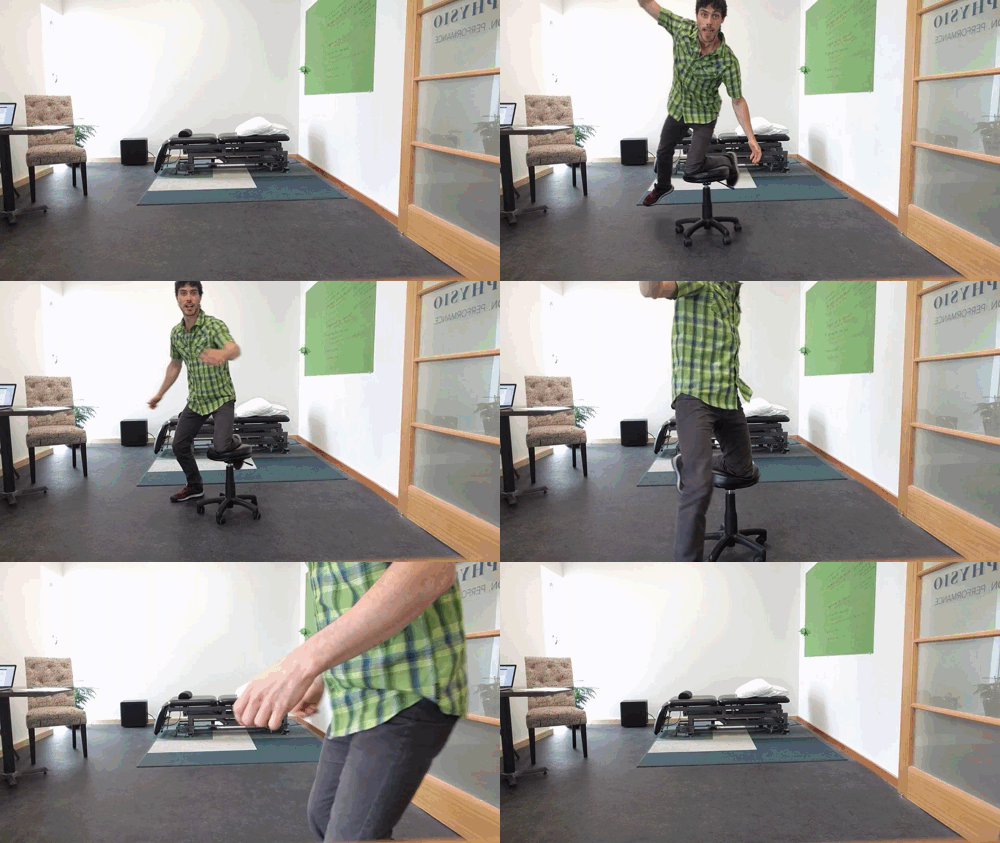
WEEK 2:
…
It turns out my ankle was in fact broken... and I needed surgery.
…
To be continued...
REHABING A BROKEN PHYSIO: Navigating the Medical System
Many of my clients express frustration over the medical system. They're given poor advice, often don't get the answers they're looking for, or even worse, a diagnosis is missed, and all of the professionals they talk to say something different.
WTF is going on here?? I thought we were in the 21st century. Can't we get the story straight and use technology to streamline the process?? The truth is that things are complicated and we have to make the best of the current situation. Otherwise you're in for a rough ride. Cop out answer? Yes, but here me out - my story isn't much different.
May 17th: I had my bouldering fall, went to the ER for x-rays. The doctor there looked at the x-rays and sent me on my way after determining there were no fractures.
Health Care Challenge #1
May 24th: I get a call back from my GP saying that the ER doc may have missed a talus fracture and that I would likely need a CT scan. I need to go back to the ER to get another x-ray.
So I go back to the ER and sure enough the second x-ray shows the same thing: a potential avulsion fracture of the talus; I need a CT scan to confirm the diagnosis. So off to Whistler I go for a CT scan. The CT scan shows a displaced avulsion fracture of the lateral process of the talus. In other words, I may need surgery to put the bone back together .
Many of my clients have gotten angry about a missed fracture on an x-ray. How could they miss it? It's in plain site!! Things aren't so simple. The problem is that some of these fractures are notoriously hard to spot. Can you see it?
fracture image
I took this picture on my cellphone that very night and studied the image extensively and I couldn't tell anything was wrong. It's not what I'm trained in doing. Though ER docs have training in reading x-rays, they're not as good at it as a radiologist. The upside is that we have fail safes within the medical system. Once the ER doc sends me home, the x-ray gets sent to the radiologist, who has extensive training in reading images. This is where the fracture was caught. He noted there was a potential avulsion fracture of the talus. He couldn't tell for sure so recommended a follow-up x-ray and perhaps a CT scan. That's when Dr. Rivers called me, sent me for an x-ray, which turned out positive again, and thus sent me to Whistler for a CT scan. Sure enough, the CT scan showed a lateral process avulsion fracture of the talus.
Health Care Challenge #2
The very same day, I get a call from an orthopaedic surgeon. She mentions that she's consulted with another surgeon and they both agree that surgery would be beneficial, so she's going to put me on the emergency orthopaedic surgery list at Lions Gate Hospital. Here's when things get even more interesting. She also mentions that when I show up for surgery there's a chance that the surgeon doing the procedure may decide I don't in fact need surgery. Full stop.
How can that be? I either need surgery or I don't. When it comes to fractures, it should be simple! It's not simple at all. It all comes down to the degree to which the bone has been displaced. Let's break this down:
Diagnosis: a displaced avulsion fracture of the lateral process of the talus
IMAGE
In essence, a small piece of bone has become separated from the rest of the bone. They decide whether surgery is warranted based on how much the bone has separated. In my case, if the bone is displaced by more than 2mm, they use screws to put it back together. My fracture hovered right around the cutoff mark, so while 2 surgeons said we should operate, it's possible that the surgeon responsible for doing the operation could say "no, this is borderline, it's not worth your pain, or my time and the hospital's money to operate." I was in limbo.
The plan? I was to wait for a call from Lions Gate with instructions on when I would get surgery and when I should start fasting. They were hoping to get me in the very next day.
Health Care Challenge #3:
May 24th: I get a call at 9pm saying I need to start fasting. No food until I hear from them again tomorrow morning when they'll know whether they'll be able to operate on me the next day.
May 25th: I get a call at 11am from Lions Gate saying they won't be able to fit me in for surgery. They will call again tonight to let me know if I'm getting surgery tomorrow.
I get a call at 8:30pm saying that I need to start fasting again and that I'm scheduled for surgery at 11am the next day.
May 26th: My good friend Phil drove me to the hospital for my 11am appointment. I check-in at the ER, they take my vitals and take a second look. My heart rate is high, my BP is high. "Am I ok?" I admit I'm a bit nervous. They send me up to the operating floor and the nurse there starts to prep me for surgery. Vitals are taken again: "you sure you're ok?" Yes - still nervous. It's 11am - we're already running late.
1pm: the anesthesiologist talks me through options for putting me under. I can have my one leg numbed, my lower body numbed, or get knocked out entirely. I chose the later. Awake - no thanks!
2pm: I finally get to talk to the orthopaedic surgeon. He thinks I should get surgery too. 3 votes in favour, 0 votes against it. I agree to the operation. It's a go!
3pm: I get rolled into the operating room. I can feel my heart pounding against my chest, my mouth is pasty dry. The monitors show the same. "Are you ok Mr. Bateman". I nod yes. "Let's get you onto the operating table". The surgeon gets everyone's attention and confirms we're operating on my left ankle. He looks at me. I frantically nod in agreement. I rest my head on the table and the anesthesiologist comes to sight. "Here we go Mr. Bateman". To my right, a nurse is lowering a mask over my face. "Deep breaths Mr. Bateman". I take a breath in and out. "Another deep breath." I do it again. "Deeper this time, Mr. Bateman." I try to take a deep breath in. The monitors aren't very happy. "Maybe the air is escaping from the mask", I hear from another part of the room. She presses more firmly. I can't breath anymore. "Deep breath please". I barely suck in a breath. My fingers are getting tingly. She loosens her grip. I'm able to suck in a breath. My arms and neck are getting tingly. She changes her tactic. "Breath out, Mr. Bateman". That's better. The tingles start to subside, and she expresses content with a glance to the monitors. I was beginning to hyperventilate. The anesthesiologist brings in a massive white syringe and pushes it into my IV. Good night.
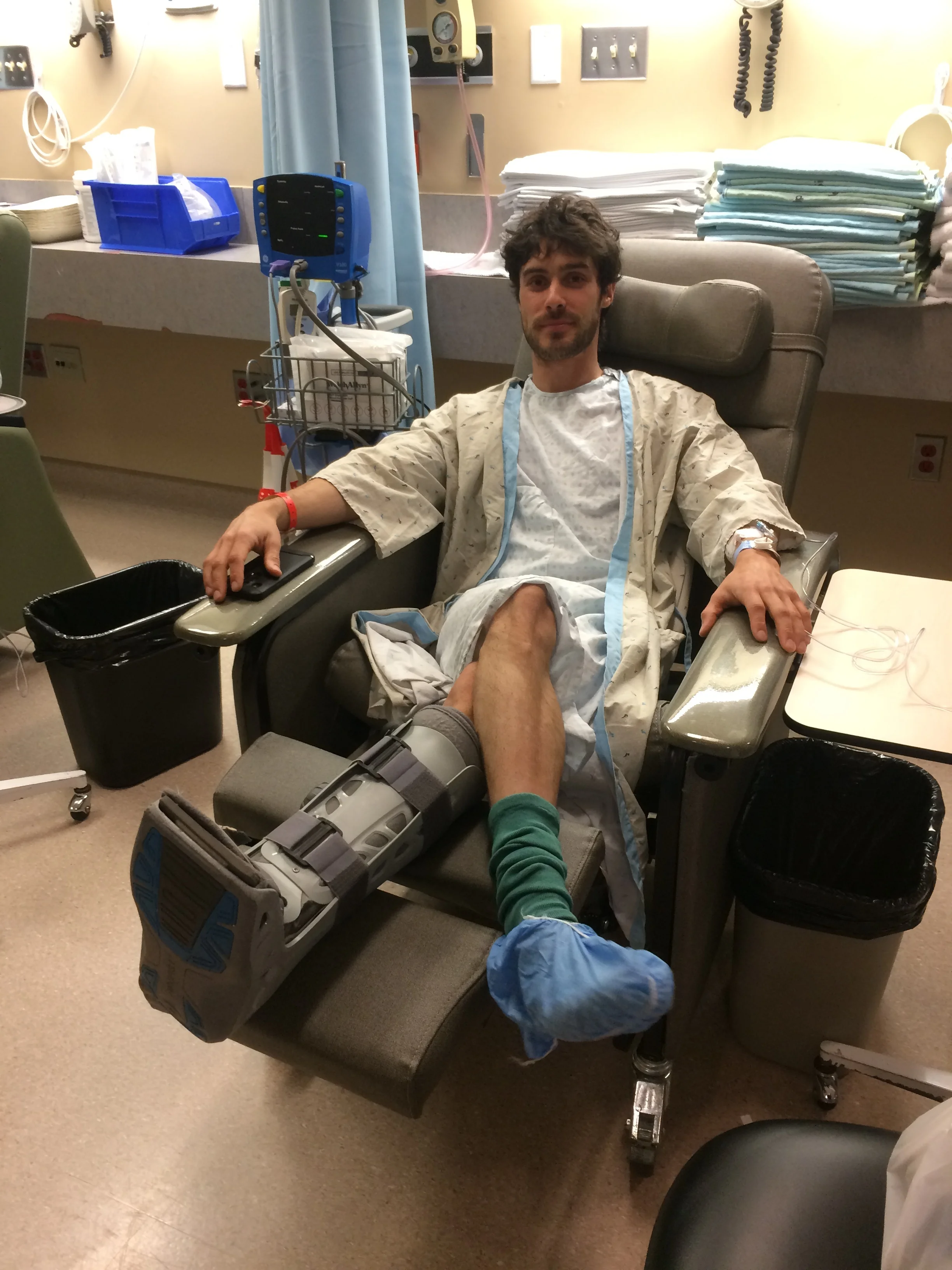
I woke up shivering uncontrollably with two nurses by my side wrapping me in hot blankets. "You're coming to, Mr. Bateman. Everything went great." I don't know how long I lay there shaking. It couldn't have been more than 30 min. My ankle was wrapped in a massive splint. "That's not to come off for 2 weeks." Well shit, I can't put my pants over that. My wonderful partner had to run to Joe Fresh for a pair of shorts I could wear.
Pain is a Protector
Project Physio will be running pain education workshops. Skip to the bottom for details!
Pain is still a mystery to many of us, and misconceptions about what it is, how it works and its purpose is prevalent even amongst healthcare providers. Fortunately, pain science has come a long way and we're much better at explaining what's happening in our body when we experience pain.
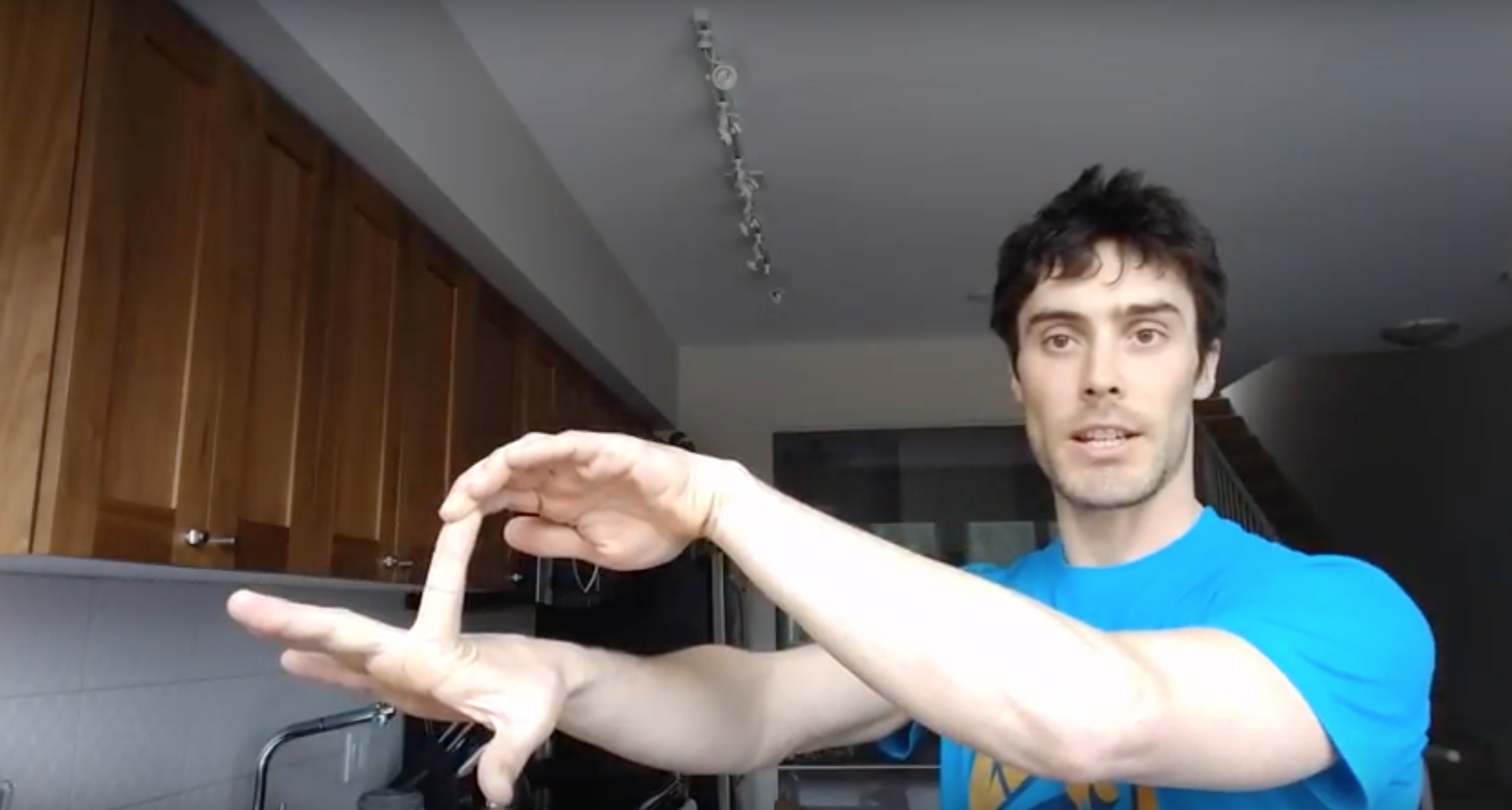
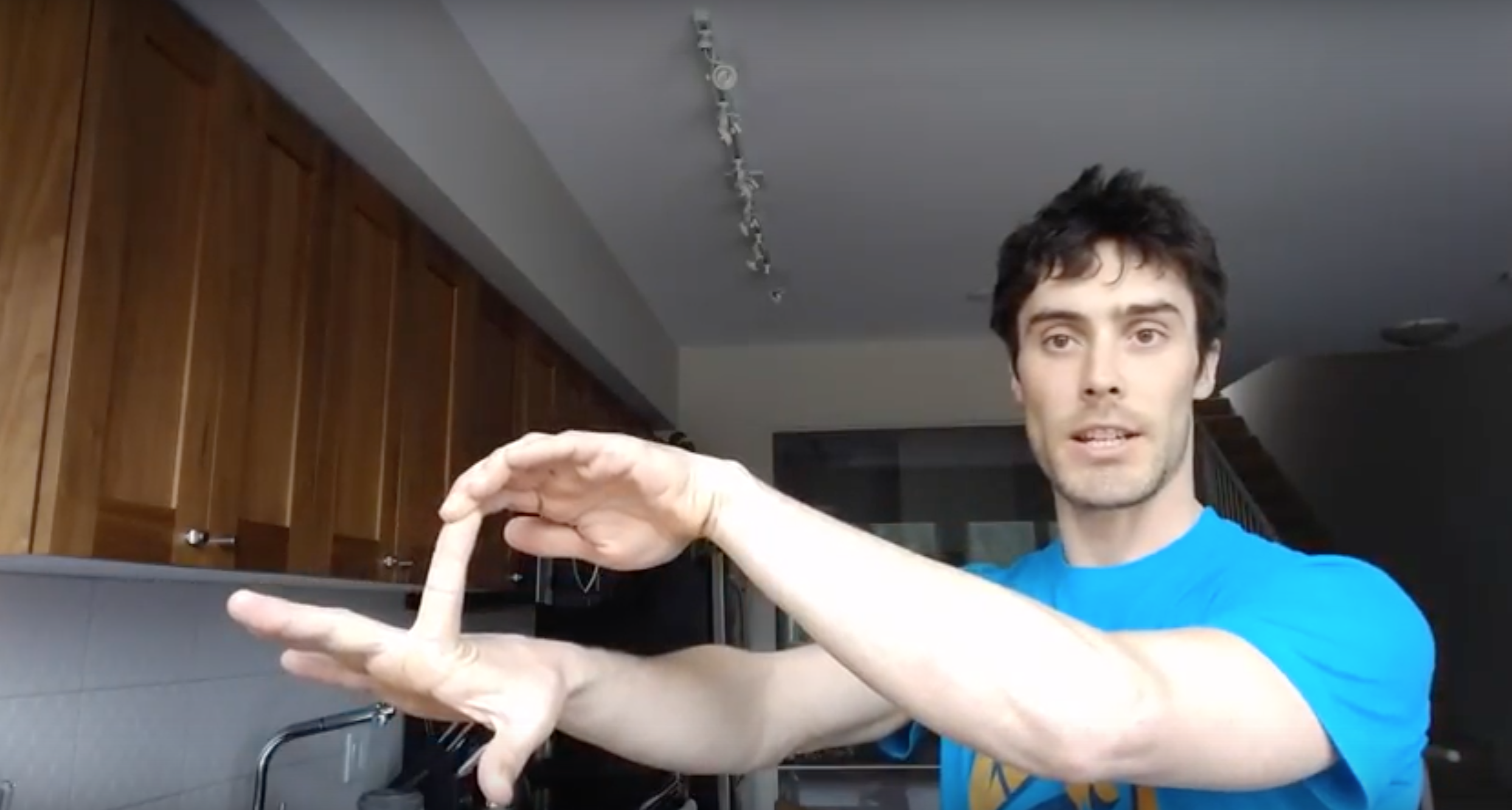
One of the more important concepts to remember is that pain is a protector. It's meant to warn you of a potential danger to your body. It's not, however, a good indicator of whether or not tissue harm has occurred to your body. Check out my latest video for an example!
For you ice climbers, I'm sure you'll be familiar with the following example. Picture yourself on a WI 4 route, nearing the top and fighting a mad pump. This is the longest ice route you've done so far! You manage to sink your axe over the lip and let out a holler as you pull through and stand up victoriously. You drop your axes and take a deep breath, reflecting on how psyched you are on completing your hardest climb yet - a personal best.
You slowly start to feel an ache build in your hands, and it quickly progresses to a debilitating pain so agonizing you let out another yelp. It progresses to a scream and soon enough you're on your knees yelling at the top of your lungs. It feels like your hands are in a hydraulic press, and the pressure is building excruciatingly slow, squeezing your hands to pulp. There's nothing you can do about it. It continues to build, and build, and build until finally you start to dry heave, then vomit all over the ice you just climbed. That's right, you've just experienced the screaming barfies.
After a few minutes the pain subsides and you have full function of your hands again. Unless you were also frostbitten, there's a slim chance you've caused any lasting harm. That being said, you'll never forget that pain.
In this example, the pain was a result of blood flow returning to the nerves in your hands and fingers. The nerve endings responsible for transmitting "harm" signals to your brain we're triggered as they were reawakened with fresh blood. Screaming barfies provide a good example of how you can experience significant pain without lasting tissue harm.
Project Physio will be running Pain Education Workshops aimed at demystifying pain myths and providing you with novel tools for pain management. We've partnered with Kavanagh Danaher, Registered Dietitian, and Danielle Berman, Social Worker, to help make this a comprehensive workshop. It's designed for anyone keen on learning more about pain, whether you have a fresh injury, or are struggling with managing chronic pain.
Details of the workshop are below. Please RSVP to william.bateman@projectphysio.com or by calling 604.243.1634. Space is limited!
When: April 29th, 2017 from 9am - 12pm
Where: Ground Up Climbing Gym
Price: by donation
On the Docket:
- Understanding pain and its neurophysiology
Chronic pain and the altered nervous system
How our thoughts and emotions affect our pain
Our diet's role in pain and recovery
Management strategies
Movement through persistent pain
Pacing and graded exposure
Mindfulness
Visualization
Accessing the virtual body
Assessing and managing diet
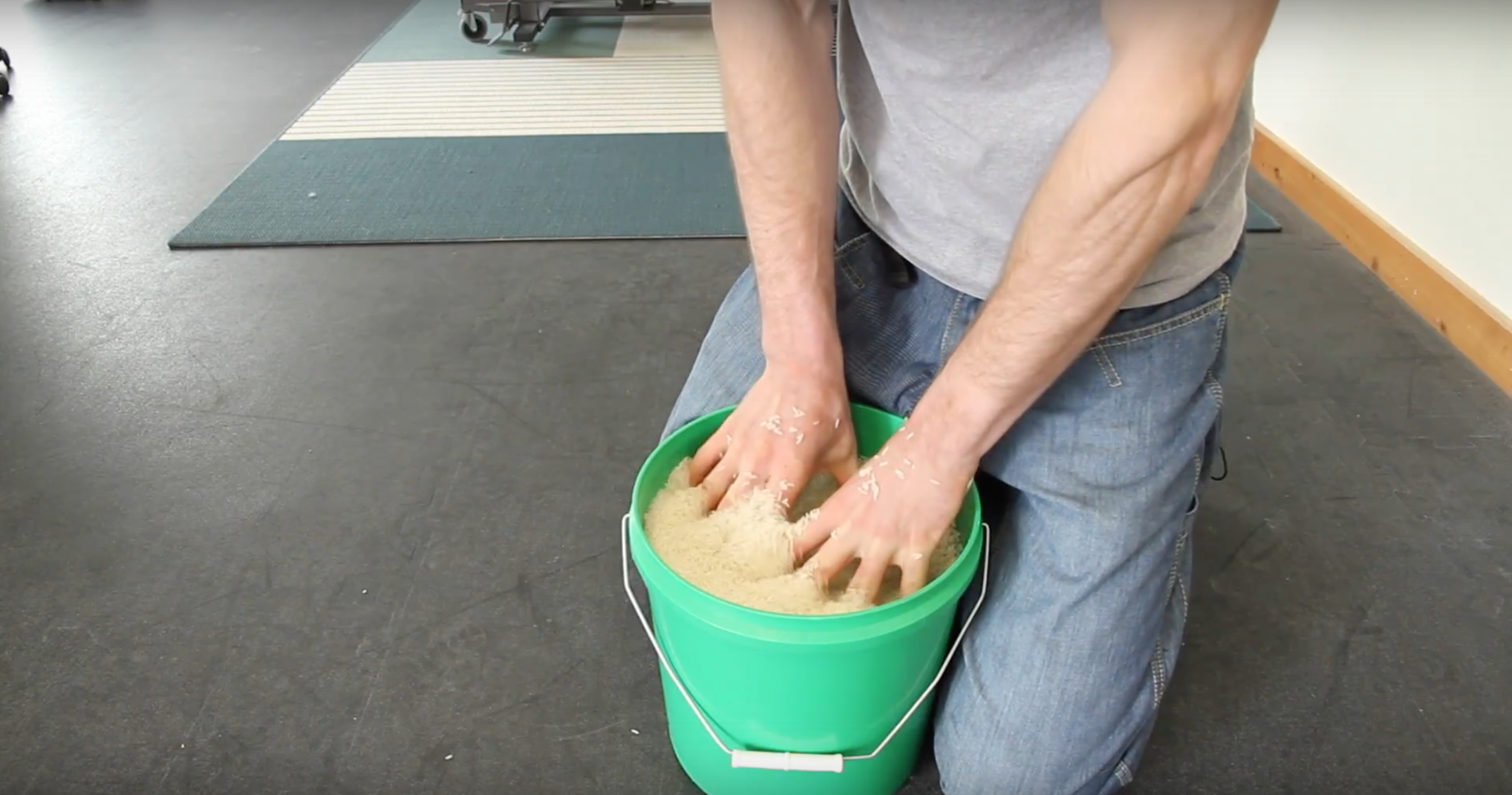
Wrist and Elbow Training Part 4: The Rice Bucket
In this video we'll demonstrate how to make the most out of the rice bucket. Stu Smith, local crusher, demonstrates the routine he uses to keep his hands, wrists and forearms healthy and strong. Have a gander and share your thoughts. Big thanks to Stu!
Want to learn more about Stu? Check out this video profile by Gripped: